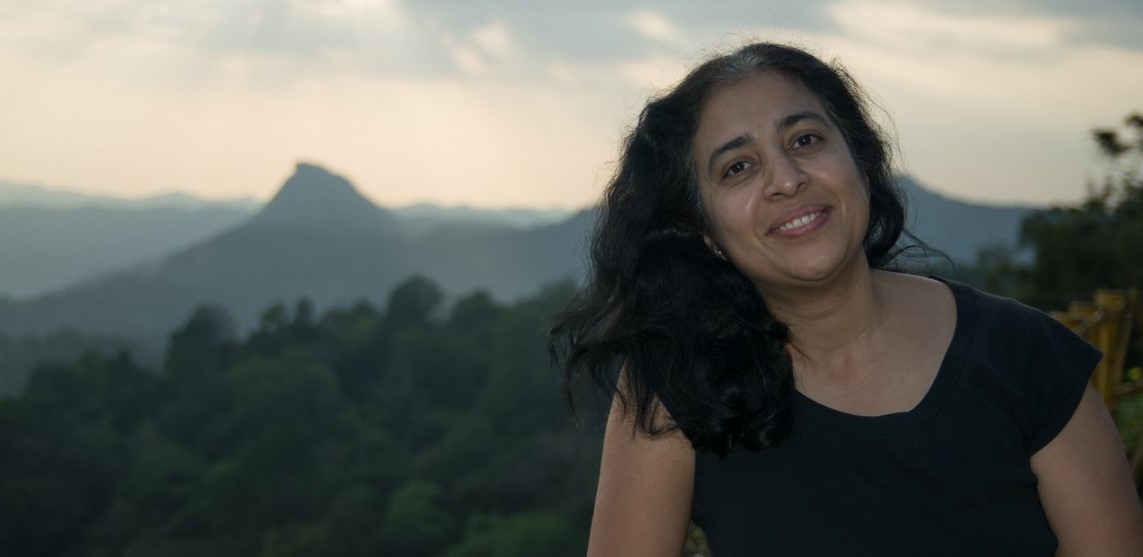
Hi, I am Monika. I am 55 years old and living in Germany.
I was born in India. Since then I have lived in the United States, Pakistan, Czechoslovakia, Germany, China, and Sweden. As a tourist, I have visited more than 46 countries. I speak English, German, Spanish, Swedish, Hindi, Urdu, and some Mandarin Chinese. That is the short version. The longer version is that each of those countries changed how I think about growing up, growing older, and what a "normal" life is supposed to look like.
In every country I lived in, the religion was different, the food was different, the weather was different. But the people were not as different as you might expect. Everywhere I went, I made friends quickly. And everywhere, those friends were chasing the same things: a decent income, a stable home, someone to love, a feeling that their life was going somewhere. The specifics changed. The shape of the ambition did not.
What surprised me most was the timing. Among people with similar education and economic backgrounds, the big life events kept landing in roughly the same windows, no matter the country. Starting a first real job. Getting married. Becoming a parent. Buying a home. Facing the first serious illness in the family. My friends in Delhi, Munich, Stockholm, and Beijing were hitting these milestones within a few years of each other, as if following the same invisible schedule. That pattern is what started this blog.
What I Read, and What I Found Missing
I began reading everything I could find on life stages. Freud, Piaget, Erikson, Levinson, Steiner, the Vedic ashrama system, Confucius. There is no shortage of theories. But most of them had blind spots. Child development has been studied exhaustively. Adult development has not. Many of the existing models define adulthood in long, blurry stretches: Erikson groups ages 20 to 40 into one stage and 40 to 65 into another. Levinson's work stops at 63 and barely acknowledges the decades that follow. Most of these theories were written when life expectancy was shorter, gender roles were more rigid, and the concept of "emerging adulthood," the years between 19 and 24 when you are no longer a teenager but not yet a full adult, did not exist.
None of the models I found matched what I was actually seeing in people's lives, including my own.
So I Built One
After years of reading, observing, and comparing notes across cultures, I found that dividing life into six-year stages felt right. Not perfect. Not scientifically proven. But closer to the rhythm of real life than anything I had encountered. I call these stages Blobs. Four Blobs make a season: Spring (1 to 24), Summer (25 to 48), Autumn (49 to 72), and Winter (73 onward). Each Blob has its own character, its own pressures, its own questions.
I started this blog to share the idea and see whether it resonated with anyone beyond my own circle. It did. The 49 to 54 Blob page is the most visited page on this site. The post arguing that seven-year life cycles are outdated is the most read. Readers from more than 60 countries have found their way here, many of them writing to say: I recognise myself in this.
That is what I am after. Not a theory that explains everything. A way of looking at your life that makes you feel less alone in whatever stage you are navigating right now.
A Note on How This Site Is Made
Articles throughout this site, including the Blob pages and blog posts, are written with the help of AI tools, including support with research, drafting and editing.
Which Blob are you in?
I would love to hear where you are. Does it fit? Drop me a note at blobsofsix@gmail.com.