Mastering the Art of Self-Care: A Guide for Busy Adults

In today’s fast-paced world, where responsibilities often feel never-ending and expectations run high, self-care isn’t just a luxury—it’s a necessity. Especially for those in the thick of their careers, family commitments, or managing personal transitions, finding time for yourself can feel next to impossible. But here’s the thing: prioritizing self-care can help you recharge, refocus, and bring more energy to the things you care about most.

Here’s your ultimate guide to mastering self-care, tailored for the busy adult. It’s time to reclaim your well-being!

Why Self-Care Matters More Than Ever

According to the American Psychological Association, stress levels have been on the rise, and prolonged stress has been linked to both physical and mental health concerns. Engaging in regular self-care can lower stress, improve mood, and even boost productivity. When you take care of yourself, you’re better equipped to handle life’s challenges.

1. Schedule “Me Time” Like You Would an Appointment

One of the biggest hurdles in practicing self-care is making time for it. Here’s a tip: treat your self-care time like an unmissable appointment.

Actionable Tip: Block out at least 20-30 minutes daily in your calendar and dedicate this time to something that brings you peace, whether it’s reading, meditating, or a quick walk around the neighborhood.

2. Embrace Digital Detox

Our phones and devices have a sneaky way of eating into our free time. Notifications, social media scrolling, and endless emails can be draining.

Challenge: Try a digital detox for at least one day each week. Use this time to engage in face-to-face interactions, outdoor activities, or even a hobby you’ve been putting off.

App Suggestions: If you struggle to unplug, try apps like Forest or Freedom that help limit screen time.

3. Practice Mindfulness and Meditation

Mindfulness isn’t just a trend—it’s backed by science. Research from Harvard Medical School shows that practicing mindfulness can reduce stress, lower blood pressure, and improve overall well-being.

How to Start: Even just 5 minutes of deep breathing or guided meditation can make a difference. Use apps like Headspace or Calm for easy beginner sessions.

Quick Exercise: Try the “5-4-3-2-1” technique: Identify 5 things you see, 4 things you can touch, 3 things you hear, 2 things you smell, and 1 thing you taste to ground yourself in the present.

4. Physical Self-Care: Move Your Body

Exercise doesn’t just keep you physically fit; it releases endorphins that boost your mood. According to the Centers for Disease Control and Prevention (CDC), adults should aim for at least 150 minutes of moderate-intensity exercise per week.

Simple Routines: No time for the gym? Try a 15-minute yoga session at home, a brisk walk during your lunch break, or a quick HIIT workout.

Motivation Boost: Join a class or get an exercise buddy to keep you accountable.

5. Nourish Your Body with the Right Foods

What you eat can significantly impact how you feel. Emphasise the importance of a balanced diet rich in fruits, vegetables, lean proteins, and whole grains to maintain energy levels.

Meal Prep Made Easy: Dedicate a couple of hours each week to preparing healthy meals and snacks. This can save time during the week and make healthy choices more accessible.

Hydration Reminder: Don’t forget to drink plenty of water. Dehydration can lead to fatigue and reduced focus.

6. Engage in a Creative Hobby
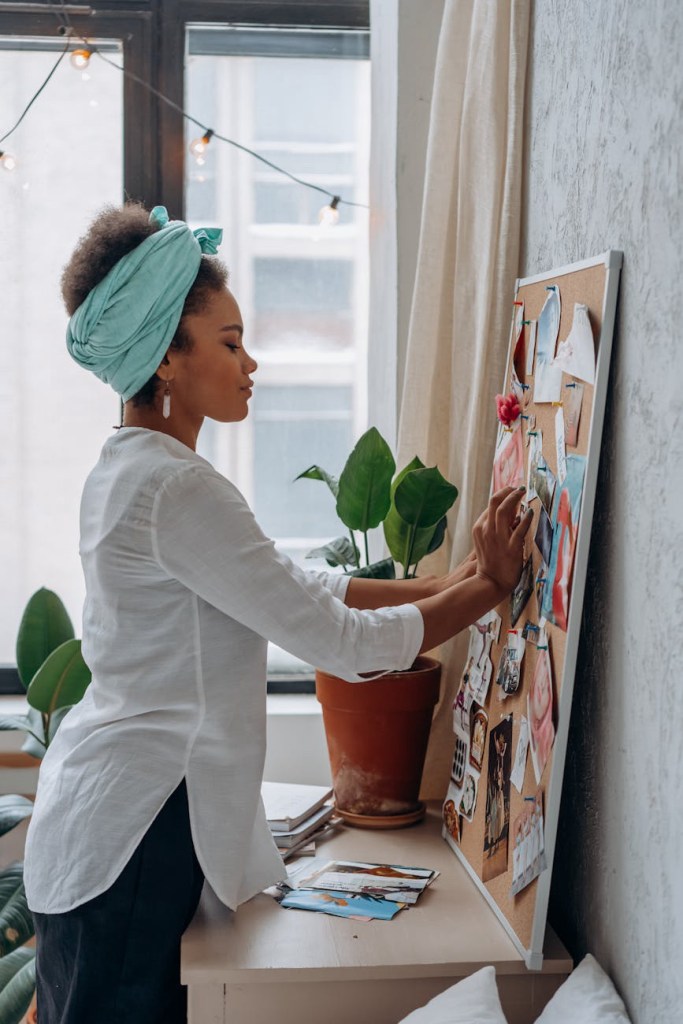
Hobbies aren’t just for kids! Engaging in something creative like painting, gardening, or playing an instrument can reduce stress and improve your overall well-being.

Get Started: Pick up an adult coloring book, learn a new language on Duolingo, or start a small DIY project.

7. Prioritize Sleep

Sleep is foundational for good health. Poor sleep can affect your concentration, mood, and overall productivity.

Sleep Hygiene Tips: Establish a regular bedtime routine, limit screen time before bed, and keep your bedroom cool and dark. Apps like Sleep Cycle can help you track your sleep patterns.

Quick Fact: According to Sleep Foundation, adults should aim for 7-9 hours of sleep per night.

8. Strengthen Your Support Network

Sometimes self-care is about surrounding yourself with the right people. Social connections can boost happiness and provide a safety net during challenging times.

Stay Connected: Organize regular catch-ups with friends or join community groups that align with your interests.

Virtual Options: If distance is an issue, platforms like Zoom or WhatsApp make it easy to stay in touch.

Final Thoughts: Self-Care is a Lifelong Journey

Remember, self-care isn’t a one-size-fits-all solution. It’s about experimenting with what makes you feel your best and adapting as life changes. Make yourself a priority, because, in the long run, investing in your well-being pays the greatest dividends.

What’s your favorite self-care practice? Share it in the comments and let’s inspire each other to live our best, most balanced lives!


Mastering Your 24 Hours: Finding Balance in Busy Lives

A day has 24 hours. That sounds like a ton, right? Plenty of time to juggle work, family, health, hobbies, and all those little things we’d love to fit in. But let’s break it down a bit.

Reality Check: Sleep Takes 8 Hours.
Let’s start by pulling out the recommended 8 hours for sleep. That leaves us with 16 hours.

Working for a Living? There Goes Another 8.
Most of us need to work, so let’s subtract another 8 hours. Now we’re down to 8 hours.

The Daily Basics—Hygiene, Food, and Getting Around
Now we factor in the daily necessities: getting ready, eating, doing dishes, quick grocery runs, and commuting. Realistically, this takes about 3 hours. Now we’re at 5 hours.

Life’s In-Between Moments
Even with the essentials covered, we’re human. We need moments to breathe between tasks. Let our brains recharge. Maybe scroll through our phones or just…sit. Let’s allow an hour for this buffer. Now we’re left with 4 hours.

Surprise: A Day Has 4 Hours, Not 24!

So here we are, with just 4 hours left. Four hours to meet all the other big, important parts of our lives:

  • Kids
  • Partner
  • Home
  • Extended family
  • Friends
  • Ourselves

Does 4 hours still sound like a lot? Not so much, right? And for anyone thinking, “What about weekends?”—Nope, I refuse to live my “real life” only two days a week!

The tricky part is that you need to actively decide where these 4 hours go. Otherwise, any one of those priorities can easily take over. Some of us work overtime. Others let parenting fill the hours, from school pickups to helping with homework. Or maybe you dive into self-care—sports, hobbies, Netflix marathons, social media binges.

When Life Just Happens…

For me, when I let things “just happen,” I start feeling frustrated. It seems like something’s always slipping through the cracks. My home becomes a mess, relationships feel neglected, and somehow, my “me-time” is always the first to go.

One choice, of course, is to prioritize or even let go of some commitments. Some choose not to have kids, others prefer fewer social obligations, and some sacrifice time for themselves. But what if you want to make space for it all?

My Solution: Designating Days

Here’s what works for me—at least, most of the time: actively setting aside days for specific priorities. This takes a bit of discipline, but it helps me keep a sense of balance. For example:

  • Mondays and Fridays: Sports or exercise days
  • Wednesdays: Date night with my partner
  • Tuesdays: Family night for movies or games
  • Saturdays: Social time with friends or family
  • Thursdays: Girls’ night out

Sounds a little intense, right? But I find that this structure helps me feel like I’m actually in control. Then, at other times, I let things happen as they come. This “go-with-the-flow” approach works for a while, but I usually find myself wanting to organize again after a bit.


How about you? How do you keep life in balance? Any tricks to share, or are you struggling with the same 24-hour puzzle? I’d love to hear how you organize your time!


Navigating Your Quarter-Life Crisis: A Practical Guide

Surviving Your Twenties

Your twenties can feel like a wild ride—exciting yet confusing. Between trying to find your dream job, managing finances, and figuring out relationships, it’s easy to feel overwhelmed. If you’re experiencing a quarter-life crisis, you’re not alone. Here are some practical tips to help you navigate this transition, with real-life stories, advice, and a few data points to back it up.

1. You’re Not Behind, You’re on Your Own Path

It’s easy to compare yourself to others, especially when social media seems to show everyone else’s highlight reel. But your twenties are a time to explore, make mistakes, and find your own path.

Tip: Instead of comparing, write down your personal goals and values. Focus on small steps you can take to move forward on your own terms.

2. Exploration Is Key, So Embrace It

Your twenties are a time to try new things. Whether it’s starting a side project, traveling, or exploring different career paths, every experience teaches you something valuable.

Tip: Set aside time each month to try something new—whether it’s learning a new skill, attending a workshop, or simply reading a book on a different topic.

3. Change Can Be Scary, But It’s Also Necessary

Life in your twenties is full of changes—new cities, new jobs, new relationships. Embracing change can be tough, but it’s part of growth.

Tip: When faced with change, take a deep breath and focus on the positives. What new skills or opportunities could come from this? Write down your fears and how you can address them.

Have you ever made a major life change that paid off? Share your experience and inspire others in the comments.

4. Build a Support Network—It Makes a Difference

Navigating adulthood is easier when you have people to lean on. Whether it’s friends, family, mentors, or even online communities, don’t go it alone.

Tip: Attend networking events, join social groups, or simply reconnect with old friends. Websites like Meetup and LinkedIn can help you find like-minded individuals.

5. Manage Your Finances (and Stress) Wisely

Money can be one of the biggest stressors in your twenties. From student loans to saving for future goals, it’s important to get a handle on your finances early.

Tip: Start by tracking your income and expenses using a budgeting app like Mint or YNAB. Consider setting aside a small percentage of your earnings for an emergency fund.

6. Self-Care Isn’t Selfish

It’s easy to neglect your mental and physical health when you’re busy building a career or navigating personal life. But taking care of yourself is crucial.

Tip: Find activities that help you unwind, whether it’s exercise, meditation, or a creative hobby. Make time for these regularly. Schedule “me-time” each week. Treat it as non-negotiable, just like an important meeting or deadline.

7. Embrace the Learning Curve

No one has all the answers, and that’s okay. Your twenties are about learning—whether it’s about your career, relationships, or yourself. Be open to new experiences, and don’t be afraid to ask for help.

Tip: Commit to continuous learning. Whether through online courses, books, or simply asking questions, the more you learn, the more confident you’ll become.


Final Thoughts: Your twenties are a time for exploration, learning, and growth. It can be messy, unpredictable, and yes, sometimes downright scary. But you’ve got this. Embrace the chaos, take care of yourself, and don’t be afraid to take the scenic route. What’s been your biggest lesson in your twenties so far? Share in the comments below!

Time to leave behind the 7-year life-cycles?

You’ve probably heard of the “7-year itch.” Maybe you’re also familiar with the idea that our body renews all its cells every 7 years, the 7-year Chakras from Vedic India, the ancient Greek life cycles, or the Waldorf theories from Rudolf Steiner, the anthroposophist. Perhaps you’re wondering, “Is there any truth behind these 7-year cycles?” or “Do they still apply to our lives today?”

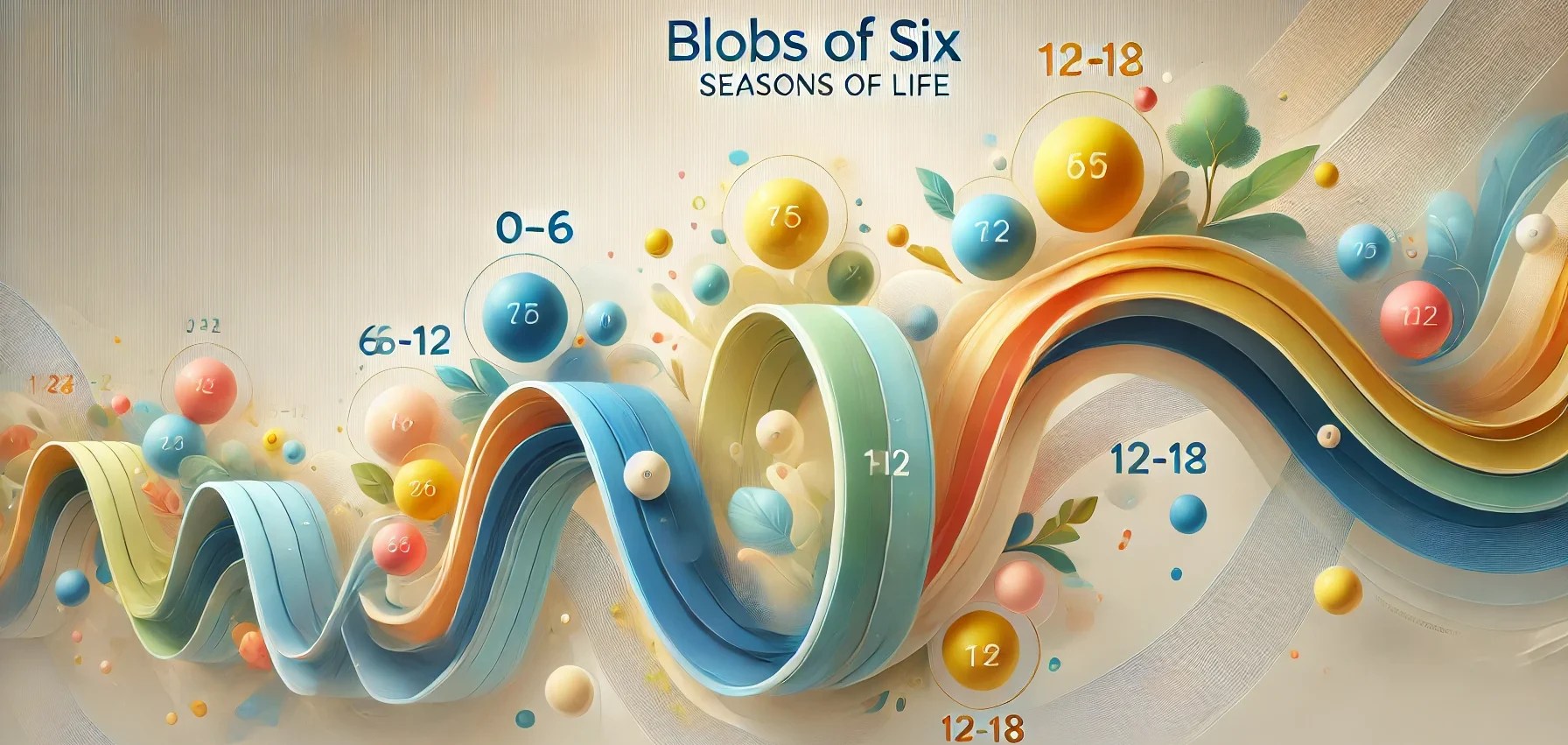
Read on to see why these traditional cycles might be outdated and how Blobs of 6-year stages, bundled into the seasons of Spring (growing), Summer (maturing), Autumn (harvesting), and Winter (releasing), better mirror our lives in today’s world.

Does Our Body Renew Itself Every 7 Years?

Let’s start by dispelling this myth: the belief that the body and mind renew themselves every 7 years is simply not true. Sure, our cells are constantly renewing, but at different rates. According to The New York Public Library’s Science Desk Reference (Stonesong Press, 1995), red blood cells replace themselves every four months; white blood cells renew every 2-3 weeks. Colon cells live only 4 days, and sperm cells just 3! Skin cells last 2-3 weeks, while brain cells remain for life—neurons don’t regenerate. While we do undergo many changes over 7 years, similar shifts can happen over 5 years, 10 years, or even just 2 years. Scientifically, there’s no basis for the “7-year renewal” belief.

Is the 7-Year Itch Real?

man-couple-people-woman-600-x-400The idea of the “7-year itch” was popularized by the 1955 Marilyn Monroe movie of the same name, which suggested marriages start facing trouble around the 7-year mark. While it’s true that this period can be challenging, as couples often have less time for each other while raising young children, data shows that the 7-year mark is just an average.

Research by Dr. Larry A. Kurdek, a psychology professor from Wright State University, found that marital quality often declines after 4 years, with many divorces occurring around this time. A 2010 study by Grant Thornton revealed that most marriages fall apart around the 12-year mark, while another study in 2012 pointed to a dip around 3 years, citing that many couples now get together later in life without enough time to know each other before having children. So, once again, there’s no solid evidence for a recurring 7-year itch.

Are 7-Year Life Cycles Keeping Up with Our Changing Lifestyles?

Rudolf Steiner, the founder of Anthroposophy and the Waldorf school concept, described life stages in 7-year intervals back in 1924. Many modern 7-year cycle models are still based on his theories. However, human life has changed dramatically since then. Thanks to medical advances, people are living much longer, which has reshaped how we experience different stages of life.

Here’s how the 7-year life stages tend to miss important milestones that are more accurately captured by the 6-year Blobs:

The Spring Season (1-24 years) vs. Steiner’s Early Stages

  • Steiner’s 0-7 years vs. the 1st Blob (1-6 years): In most OECD countries, schooling starts at around age 6 (sometimes even 5), marking the end of the toddler years around that age.
  • Steiner’s 14-21 vs. the 3rd Blob (13-18 years): Today, puberty and teenage years are seen as the 13-18/19 age range, with most teens finishing high school around 18. With longer educational periods, the learning years extend well beyond age 21, often into the mid-20s. This is captured in the 4th Blob of Spring: The Emerging Adult (19-24 years).

The Summer Season (25-48 years) vs. Steiner’s “Sun” Stages

Steiner’s next three stages (21-28; 28-35; 35-42) reflect adult working years, where play turns into responsibility. But the Summer Season of the 6-year Blobs (25-48) spans a broader range, reflecting the shift in today’s productive working years.

Extending into the Autumn Season (49-72 years)

Steiner’s last stages (42-48; 48-56; 56-63) represent a time when, according to him, the soul achieves a higher sense of Self. However, with people now living into their 80s and 90s, the Autumn Season (49-72 years) of the 6-year Blobs portrays today’s middle-aged adults as healthy, productive, and independence-seeking, rather than soul-searching.

With traditional retirement ages shifting, some OECD countries are pushing the concept of active work life into the early 70s. As described in The 100-Year Life – Living and Working in an Age of Longevity, this shift reflects a financial need to extend careers to around 70. The 4th Blob of Autumn: The Independent Elder (67-72 years), contrasts with Steiner’s final stages that ended at an early age of 63, when Saturn completed its second return.

The 7 Cycles of the 7 Chakras

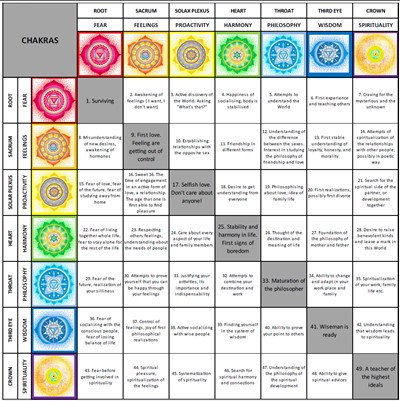
As explained illustratively in the article “The 7 cycles of the 7 chakra – The continuity of life” the Indian Vedic Chakra is based on the philosophy that:

…every seven years humans achieve various levels of understanding based upon what phase of spiritual development their endocrine/ chakra systems is in…Each of the chakras affect our life in various ways. Within each of these stages, the other chakras influence the progress of the individual’s self-realization process. There are in each cycle primary influential traits that direct these phases. Every seven years we repeat this cycle, while during that phase feeling the impact of the chakra that is maturing in that particular cycle.

chakrasfinal (400 x 401).jpg

The 7×7 matrix of Vedic Chakras ends at 49 years, a reflection of a time when life expectancy was around 50-60 years. But with people now living much longer, we have more time to achieve what was once compressed into a 49-year span. For example, the 3rd Chakra (15-21 years) traditionally involves seeking stable relationships, but today’s Emerging Adults (19-24 years) or even those in their late 20s are often not ready for such commitments. The 7th Chakra (43-49 years) represents spiritual maturity, but in modern life, this stage of soul-searching is often postponed to later years.

Time for a Change

I believe it’s time to redefine these age-old models and adapt them to today’s lifestyles. The 6-year Blobs capture the shifts and patterns in a way that feels more natural and aligned with how we live now. What do you think? I’d love to hear your views!

Read more about the 6 year Blobs:
Spring: 1-6, 7-12, 13-18, 19-24
Summer: 25-30, 31-36, 37-42, 43-48
Autumn: 49-54, 55-60, 61-66, 67-72
Winter: 73-78, 79-84, 85-91, 91-…


References and Resources

Does the Human Body Really Replace Itself Every 7 Years?

Study Finds a 7-Year Itch, and a 4-Year One

Forget the seven-year itch, the real test comes at TWELVE years

The Greek Concept of the “Seven Stages of Life”and Its New Testament Significance

The Stages of Life According to Rudolf Steiner

The 7 cycles of the 7 Chakra