
"How old would you be if you didn't know how old you was?" - Satchel Paige
When someone asks how old you are, the answer usually comes out without much thought. But is that number really how old you feel? And is it your true age? What’s in an age, after all? Do you truly identify with that number?
What we usually think of when we mention our age is our Chronological Age—a simple matter of math, based on the number of times our planet has orbited the sun since our birth. While this age can suggest patterns and expectations at different stages of life, there are often parts of you that don’t quite fit the mould. Why is that?
The reason is that age is not simply a number. Your true age, sometimes referred to as Functional Age, is actually a blend of at least four different types of age.
Mental Age
Your mental age is not just about intelligence or how much you know. Online intelligence tests often claim to measure your mental age by calculating an IQ score, comparing your performance to the average for your chronological age. If your mental age matches your chronological age, you get an IQ of 100.
However, mental age goes beyond IQ. These tests usually fail to measure your emotional intelligence (EQ). For instance, a 4-year-old might have the IQ of a 7-year-old but the emotional maturity of a 3-year-old. Adults might act like teenagers, or life-changing events may lead to rapid mental aging, like a teenage mother who gains maturity quickly, or someone coping with loss. Because of this complexity, measuring mental age accurately often requires in-depth sessions with a psychologist, if it’s possible at all.
Standard mental aging can be positively influenced by regular physical exercise, as the famous saying suggests, “Mens sana in corpore sano“—a healthy mind in a healthy body.
Biological Age
Biological age reflects the state of your physical body. It’s determined by assessing vital functions and indicators, ranging from outward signs like grey hair and wrinkles to more critical markers such as blood pressure and organ health. Some even consider “loss of height,” which can occur due to decreased bone density (after age 40, you might lose up to half an inch every 10 years).
A key player in biological aging is telomeres—structures that protect the ends of chromosomes. Over time, telomeres shorten, making cells age faster. Shorter telomeres mean less protection for chromosomes, increasing the risk of diseases and early death. Yet, maintaining a healthy diet and regular exercise can help preserve telomere length and influence biological aging.
Genetics also plays a significant role. Some families are known for their longevity, thanks to “lucky genes” that allow them to stay biologically fit even in old age. One remarkable example is Fauja Singh, who completed a marathon at the age of 101. Medical tests at age 99 indicated that his biological age was equivalent to a 40-year-old. Watch him in action here: Watch Fauja Singh Running.
Sociocultural Age
Sociocultural age refers to the roles you play in relation to society and culture. Are your roles typical for your chronological age, or do they break societal expectations?
Social roles often follow patterns—schooling until 18, vocational studies in your 20s, parenthood in your 30s, career peaks in your 40s, and so forth. Deviating from these expectations can define your sociocultural age. For instance, a teenage mother might take on the responsibilities of someone in their 30s, while a professional athlete might retire in their 30s, adopting a role typical of someone much older. Conversely, you might return to university at 50 and feel more like you’re in your 20s.
These roles can influence your other “ages” too. Late parenthood or returning to studies can keep you mentally young, while early responsibilities may age you more quickly.
Perceived Age
You might know your chronological, mental, biological, and sociocultural ages, but they don’t always align with how you feel. Your Perceived Age, or “felt-age,” is about how old you feel in relation to your physical, mental, and social well-being. A positive self-perception of health often correlates with higher well-being. Older adults, through social comparison, may perceive themselves as healthier than their peers, even if objective health has declined. This is known as the paradox of aging.
90 year old when asked how it felt to be 90: "I wouldn't know, darling. I don't feel 90."
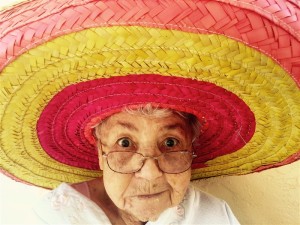 Even at a younger age, your felt-age can fluctuate. You may feel older or younger depending on your health, mental state, or social interactions. Emerging adults, unsure about their place in life, might feel out of sync with their chronological age. Older adults who surround themselves with younger, more energetic people might feel younger as well. Meanwhile, low energy levels or negative self-perception can make you feel older, while staying active can lead to a more youthful sense of self.
Felt-age often aligns with how others perceive you. Perceived age can be an essential part of clinical assessments, especially in older adults, where wrinkled skin or a low body mass index (BMI) may make someone appear older. For children, perceived age might determine whether they’re ready for school.
So, How Old Are You Really?
As you can see, age is more complex than you might think. It’s more than just a number—it’s a multifaceted concept that blends mental, biological, sociocultural, and perceived aspects. Perhaps next time someone asks, “How old are you?” you’ll pause and consider the different dimensions of your true age.
Do you feel your age? If not, why not? Share your thoughts in the comments below!

 Life Stages in Six-Year Blobs – Personal Growth by Age
Very true! I am well-read and academic, so in terms of knowledge I feel very wise when folk come to me to ask me stuff. I must be about 500. Emotionally, I haven’t had many relationships, sometimes suffer from low self-esteem and worry about offending people. I must be 15. Physically I still get spots, eat sweets before dinner but can walk for hours, don’t get indigestion or hangovers, no aches or pains, good teeth. I must be 25.
I could go on…point proven haha!
LikeLiked by 1 person
Would be interesting to device a formula for calculating the true age :). One could give the different ages different weights (depending on your own priorities) and calculate one true number :).
LikeLiked by 1 person
I always laugh when my Mom and her sisters – all in their late ’80s – talk about ‘girls’ and ‘boys’ – since I know that they are their contemporaries!
LikeLiked by 1 person
Yes. It’s funny. We laughed a lot once when my mom was talking about a “young man” who turned out to be 60 years old 🙂
LikeLiked by 1 person
I like to say “you’re only as old as you feel”. I’ve been in my mid 30’s now for over a decade. 🙂
LikeLiked by 1 person
So what you are doing there is that you are convincing yourself that your felt-age is 30. The psych is a strong tool. I am sure it makes a big difference :). My father-in-law started counting his age backwards after 45. Now he is 13!
LikeLiked by 1 person
I often have to stop and think about it when asked how old I am. I think that’s a sign that I’m pretty old
LikeLiked by 1 person
Or maybe you don’t feel that old :).
LikeLiked by 1 person
I spent my entire 36th year thinking I was 37. Age is confusing!
LikeLiked by 1 person
I need to calculate my age anytime anyone asks. That started after around 35. Until then I always knew how old I was 🙂
LikeLike
Unfortunately, I feel older than my 52 years due to medical issues. 😦
LikeLiked by 1 person
Sorry to hear that. Hope things turn for the better!
LikeLike