
The average life expectancy in EU-28 countries was 80.6 years in 2022 (77.9 for men, 83.3 for women), and the number of people reaching this age is steadily increasing. According to Eurostat statistics, the share of those aged 80 years or above in the EU’s population is projected to have a two and a half fold increase between 2023 and 2100, from 6.0 % to 15.3 %.
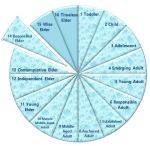
By this Blob, many elders become quite dependent on others, often requiring daily assistance and increased medical attention. Activity levels decrease, and there may be a growing sense of losing control over life, leading to emotional challenges such as depression and loneliness. Despite these difficulties, most elderly people, if they can, still value their independence and prefer to live in their own homes. In 2011, only 1.7% of elderly persons aged 65–84 in the EU were residing in healthcare or elderly care institutions.
The Importance of Mental and Physical Activity
The relationship between physical health and mental well-being becomes even more critical at this stage. Regular mental exercise, such as reading the newspaper instead of watching TV, and staying socially engaged can significantly improve quality of life. Physical activity, like daily walks, helps maintain the mind-body connection and reduces isolation. Research from the Cooper Institute for Aerobics Research in Dallas found that men and women who walk at least half an hour each day cut their mortality rates in half compared to their sedentary peers.
As Gail Sheehy states in her book New Passages
People with positive outlooks, who continue to connect themselves to the future and marshal their energies to defeat creeping depression, are far more likely to extend their life positively.
Concepts of Healthy Aging
Successful aging is an interdisciplinary concept that bridges psychology and sociology. To support this, the Activity Theory suggests that staying mentally and physically active increases the chances of aging well. Unlike the Disengagement Theory, which promotes withdrawing from social roles, Activity Theory emphasizes the benefits of remaining engaged in fulfilling work and maintaining social interactions with the motto: “the more you do, the better you age.” Building on this, the Continuity Theory states that older adults often maintain the same activities, behaviors, and relationships they had earlier in life. This continuity helps sustain a stable self-concept and lifestyle, providing necessary support and a sense of identity.
Physical Changes and Health Challenges
In developed countries, by the age of 80, cerebral blood flow decreases by 20%, up to 30% of skeletal muscle is lost, and renal blood flow drops by 50% compared to the age of 30. Additionally, 25% of people at this age experience vision loss, and 75% develop hearing problems.
The risk of developing Alzheimer’s disease increases significantly with age, affecting 50% of individuals by the end of this Blob. It remains the most common reason for long-term care and accounts for a large proportion of residents in elder care facilities. While aging, genes, and lifestyle contribute to Alzheimer’s and dementia, research shows that when Alzheimer’s develops in people in their 60s and 70s, they tend to experience faster brain tissue loss and cognitive decline than those who develop the condition after 80.
Finding Peace and Purpose in Aging
In his inspiring book From Age-ing to Sage-ing: A Revolutionary Approach to Growing Older, Reb Zalman offers pragmatic advice:
The aging physical body is an automobile with a lot of mileage. We have to service it to maintain its longevity, and for this, a healthy diet and exercise help. Sometimes we need a major overhaul, such as an operation. Yet, with all our maintenance, we need to recognize that we’re the driver of the automobile, not the vehicle itself.
As elders reconcile with the realities of aging, reflection and a positive mindset become invaluable tools. By focusing on inner strength and finding peace, it’s possible to transform this stage into one of wisdom, acceptance, and a fulfilling connection to the present.
What habits or activities have helped you or your loved ones stay engaged and positive in later years? Download your Life Stages in Blobs Worksheet now and document your journey!
Click here for Blob 15: Wise Elder
or read about any other Blob:
Spring: 1-6, 7-12, 13-18, 19-24
Summer: 25-30, 31-36, 37-42, 43-48
Autumn: 49-54, 55-60, 61-66, 67-72
Winter: 73-78, 79-84, 85-91, 91-…
Understand why the 7-year life stages are outdated in this Blog.
RESOURCES AND REFERENCES
From Age-ing to Sage-ing: A Revolutionary Approach to Growing Older by Reb Zalman
Your Guide to Health: Alzheimer’s: Reliable Information for Patients and Their Families by Maureen Dezell
Alzheimer’s hits harder earlier in life as people in their 60s decline more quickly than older patients in Mail Online
The greying of the baby boomers: A century-long view of ageing in European populations by Eurostat Statistics
New Passages: Mapping Your Life Across Time by Gail Sheehy
Activity theory (aging), Disengagement theory and Continuity theory from Wikipedia
Human Physiology/Development: birth through death from Wikibooks

 Life Stages in Six-Year Blobs – Personal Growth by Age
It’s good to know that it’s not all doom and gloom, that something as simple as walking can be a real benefit. I’m not there yet, but my mother is in her late 70s and I worry about that. SHe was given a prescription from her doctor to join a gym – couldn’t believe that but all her minor ailments disappeared. We must look out for ourselves and families. Shared on Twitter too.
LikeLiked by 1 person
Thanks for sharing :). My mom is also in her mid 70s. Does simple exercises every day and goes for her daily walks. Keeping active not only does her body and mind good but also keeps her social life active as she meets up with others in her age for the walks. That’s what life is about, right? 🙂
LikeLiked by 1 person
Thanks for sharing. This is encouraging. My husband’s mother was one of 9 siblings, almost all of whom succumbed to Alzheimer’s in their 60s or 70s. My husband is now in this ‘blob” of age, yet is the picture of mental alertness and fitness. We both eat healthy meals, stay active and walk near the beach each day. Hopefully this will keep us on top of life! Decisions, Decisions, Decisions
LikeLiked by 1 person
Looks like you must be doing something right. Keep on doing whatever you are doing and take good care of each other :). Best wishes!
LikeLiked by 1 person
My father suffered from vascular dementia for over 14 years until he died aged 76 in February 2017 -he was finally diagnosed aged 62 – his dementia progress varied but in his last 3 years he went downhill at a rapid pace. Perhaps if he had succombed to the disease in his 80s instead of his early 60s then maybe, as your blogpost suggests, his brain cells wouldn’t have depleted as quick – but then again would he have lived as long to get to the final stages? Thought provoking indeed.
LikeLiked by 1 person
Sorry to read. 14 years is a long time to suffer. Wishing you strength to overcome the loss.
LikeLike