
Top 10 Tips for Thriving in College Life

Tips for College Newbies: A Quick Survival Guide

Stepping into college can feel like diving into a completely new world. It’s exciting, a bit overwhelming, and definitely a big step toward adulthood. Here’s a mix of tips and a few insights to help you get through those first few months without losing your cool.

1. Pack Light, Live Light

Tip: Don’t overpack. Dorm rooms are small, and you won’t need your entire closet. Consider packing for the season and bringing more later if needed.

Key Takeaway: Stick to essentials. Bring comfort items, but avoid overloading yourself with unnecessary stuff.

2. Class Attendance Is Non-Negotiable

Tip: Showing up is half the battle. Even if you’re tired or don’t feel like it, make it to class. Regular attendance makes it easier to keep up, and professors notice who shows up.

Key Takeaway: Go to class. Missing out might save time today but will cost you later.

3. Explore Campus Resources

Tip: Make use of what’s already there. Many colleges have counselling services, career centres, libraries, and tutoring programs. If you’re struggling, don’t be afraid to reach out.

4. Master Your Time with a Planner

Tip: Create a schedule. Between classes, study sessions, part-time work, and social events, things can get chaotic. A planner or a scheduling app will help keep things in check.

Key Takeaway: Don’t try to keep everything in your head. Write it down, schedule it, and stick to your plan.

5. Network, But Don’t Stress About It

Tip: Meet people, join clubs, and be open to new experiences. Networking isn’t just about career opportunities; it’s about building relationships. But you don’t have to attend every event—find what interests you and go from there.

6. Self-Care Is Key

Tip: Don’t forget to look after yourself. College can be overwhelming, and it’s easy to get lost in the hustle. Find time to exercise, eat well, and get enough sleep.

Key Takeaway: Your well-being is just as important as your academics. Balance is the key.

7. Prepare for Modern Challenges

Tip: Understand the role of technology. With everything from AI tools to digital classes, being tech-savvy is a must. Learn to use online platforms, and stay updated on digital trends relevant to your field.

Key Takeaway: Embrace digital tools and stay flexible to adapt to new tech—it’s the future of learning and work.

8. Learn How to Budget (Really)

Tip: Set a budget. College is a time when many start managing their finances for the first time. Track your spending, avoid unnecessary purchases, and don’t blow your savings on every night out.

Got any budgeting hacks for college newbies? Drop your tips in the comments!

9. Say Yes, But Know When to Say No

Tip: Find a balance between academics and social life. College is about exploring and making memories, but you also need to know when to step back and focus.

Key Takeaway: Learn to balance. It’s okay to have fun, but remember why you’re there.

10. Be Open to Change

Tip: Things might not go as planned, and that’s okay. Whether it’s your major, friend circle, or future plans, be open to adapting and embracing change.

Key Takeaway: College is about growth, and sometimes growth means changing directions. Don’t be afraid to pivot.


Adjusting to college can be daunting, but it’s also an opportunity to learn, grow, and make memories. Embrace the challenges, and don’t forget to enjoy the ride. What’s been your biggest challenge or surprise about college so far? Share in the comments!


How old do you feel?

"How old would you be if you didn't know how old you was?" - Satchel Paige

When someone asks how old you are, the answer usually comes out without much thought. But is that number really how old you feel? And is it your true age? What’s in an age, after all? Do you truly identify with that number?

What we usually think of when we mention our age is our Chronological Age—a simple matter of math, based on the number of times our planet has orbited the sun since our birth. While this age can suggest patterns and expectations at different stages of life, there are often parts of you that don’t quite fit the mould. Why is that?

The reason is that age is not simply a number. Your true age, sometimes referred to as Functional Age, is actually a blend of at least four different types of age.

Mental Age

Your mental age is not just about intelligence or how much you know. Online intelligence tests often claim to measure your mental age by calculating an IQ score, comparing your performance to the average for your chronological age. If your mental age matches your chronological age, you get an IQ of 100.StockSnap_X2Q7LBUF6U (800 x 600)

However, mental age goes beyond IQ. These tests usually fail to measure your emotional intelligence (EQ). For instance, a 4-year-old might have the IQ of a 7-year-old but the emotional maturity of a 3-year-old. Adults might act like teenagers, or life-changing events may lead to rapid mental aging, like a teenage mother who gains maturity quickly, or someone coping with loss. Because of this complexity, measuring mental age accurately often requires in-depth sessions with a psychologist, if it’s possible at all.

Standard mental aging can be positively influenced by regular physical exercise, as the famous saying suggests, “Mens sana in corpore sano“—a healthy mind in a healthy body.

Biological Age

Biological age reflects the state of your physical body. It’s determined by assessing vital functions and indicators, ranging from outward signs like grey hair and wrinkles to more critical markers such as blood pressure and organ health. Some even consider “loss of height,” which can occur due to decreased bone density (after age 40, you might lose up to half an inch every 10 years).

A key player in biological aging is telomeres—structures that protect the ends of chromosomes. Over time, telomeres shorten, making cells age faster. Shorter telomeres mean less protection for chromosomes, increasing the risk of diseases and early death. Yet, maintaining a healthy diet and regular exercise can help preserve telomere length and influence biological aging.

Genetics also plays a significant role. Some families are known for their longevity, thanks to “lucky genes” that allow them to stay biologically fit even in old age. One remarkable example is Fauja Singh, who completed a marathon at the age of 101. Medical tests at age 99 indicated that his biological age was equivalent to a 40-year-old. Watch him in action here: Watch Fauja Singh Running.

Sociocultural Age

Sociocultural age refers to the roles you play in relation to society and culture. Are your roles typical for your chronological age, or do they break societal expectations?

Social roles often follow patterns—schooling until 18, vocational studies in your 20s, parenthood in your 30s, career peaks in your 40s, and so forth. Deviating from these expectations can define your sociocultural age. For instance, a teenage mother might take on the responsibilities of someone in their 30s, while a professional athlete might retire in their 30s, adopting a role typical of someone much older. Conversely, you might return to university at 50 and feel more like you’re in your 20s.

These roles can influence your other “ages” too. Late parenthood or returning to studies can keep you mentally young, while early responsibilities may age you more quickly.

Perceived Age

You might know your chronological, mental, biological, and sociocultural ages, but they don’t always align with how you feel. Your Perceived Age, or “felt-age,” is about how old you feel in relation to your physical, mental, and social well-being. A positive self-perception of health often correlates with higher well-being. Older adults, through social comparison, may perceive themselves as healthier than their peers, even if objective health has declined. This is known as the paradox of aging.

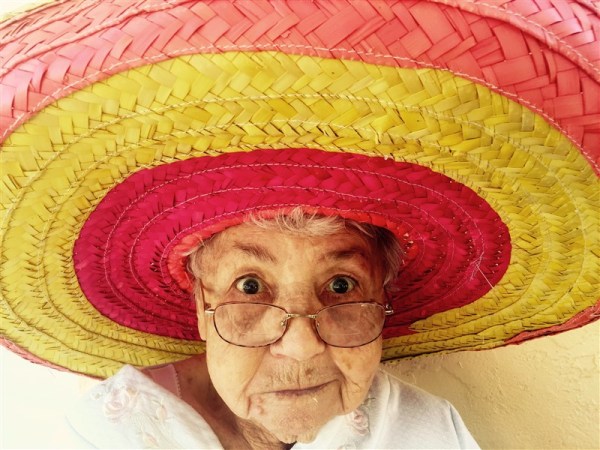
90 year old when asked how it felt to be 90: "I wouldn't know, darling. I don't feel 90."

alex-harvey-44062 (800 x 600)Even at a younger age, your felt-age can fluctuate. You may feel older or younger depending on your health, mental state, or social interactions. Emerging adults, unsure about their place in life, might feel out of sync with their chronological age. Older adults who surround themselves with younger, more energetic people might feel younger as well. Meanwhile, low energy levels or negative self-perception can make you feel older, while staying active can lead to a more youthful sense of self.
Felt-age often aligns with how others perceive you. Perceived age can be an essential part of clinical assessments, especially in older adults, where wrinkled skin or a low body mass index (BMI) may make someone appear older. For children, perceived age might determine whether they’re ready for school.

So, How Old Are You Really?

As you can see, age is more complex than you might think. It’s more than just a number—it’s a multifaceted concept that blends mental, biological, sociocultural, and perceived aspects. Perhaps next time someone asks, “How old are you?” you’ll pause and consider the different dimensions of your true age.

Do you feel your age? If not, why not? Share your thoughts in the comments below!

Life changes over time

Nothing in life is constant. Lifestyles change. Civilizations evolve. And so does the way we experience and understand different stages of life.

At the beginning of the 20th century, the average life expectancy in Europe was around 50 years. By the mid-20th century, it had increased to about 70 years. Today, it’s closer to 80 and continues to rise. In fact, the fastest-growing age group is now those aged 80 and over. This means we have roughly 30 more years to do what our great-grandparents had to manage within 50 years. Our children may have up to 90 or even 100 years, nearly double the amount of time.

The Emergence of New Life Stages

With these shifts, it’s no surprise that new models are needed to classify life today. Just as the concept of “childhood” was developed in the 17th and 18th centuries—when children were seen more as “young adults” and essential parts of the workforce—up to three new stages have emerged over the past century.

In the early 1900s, the term “adolescence” was introduced by G. Stanley Hall, describing it as a “time of disturbance and psychological confusion.” Erik Erikson and Anna Freud further refined this concept in the 1950s. Until recently, human life stages were mostly classified as infancy, childhood, adolescence, adulthood, and old age, with adulthood covering a broad span from ages 20 to 60, and old age encompassing everything beyond.

Today, however, a 60- or 70-year-old is not necessarily a frail, dependent elder. With life expectancy extending further, it became necessary to redefine old age, resulting in terms like the “young old” (60-85) and the “oldest old” (85+). Some experts also propose a “middle old” category (75-85), though there isn’t yet a universal consensus.

The extension of human lifespan has also brought about the rise of “emerging adulthood,” a concept introduced by Jeffrey Arnett in 2000. This new stage recognizes that young adults are increasingly taking longer to commit to traditional milestones, preferring to explore a sea of possibilities before settling down. Different vocations, frequent job changes, and delayed commitments to marriage and parenthood have all become part of this new life stage.

Changing Lifestyles

When I was a child, I would come home from school, finish my homework, and rush out to be with friends. I’d return home at dusk, have dinner, and maybe watch a TV show or two before heading to bed. Most of my time was spent outside, playing with friends, or even just ‘getting bored’ at home.

Today’s children and teenagers have a different experience. With unlimited access to digital entertainment—whether through TV, streaming services, tablets, or smartphones—many seldom have the opportunity to “get bored.” Social interaction often happens through apps, and “alone time” is something they might even look forward to. Just last week, when we planned to see a new blockbuster film, my friend’s 10-year-old son opted to stay home with his tablet instead. What a change! The expectations for children today are vastly different from those of my generation, and even more so compared to those of my mother or grandmother.

Emerging and Young Adulthood

Similar changes can be seen in emerging and young adulthood. Thirty years ago, if you weren’t married, hadn’t moved out of the house, or didn’t have a steady job by your late 20s, you were considered to be running late. Having your first child after 30 was seen as very late and even medically irresponsible. In my mother’s generation, the expected age for these milestones was mid-20s, and in my grandmother’s time, it was early 20s or even younger. Today, many young adults are living carefree, single lives well into their 30s. The challenging job market makes it easier to postpone settling down, as explored in the “emerging and young adult” Blobs.

Changing Gender Roles

woman-690036_640Age-based expectations aren’t the only things evolving—gender roles are also changing. Thirty or sixty years ago, it was the norm for mothers to stay at home, taking care of the children and household, while fathers earned the bread. This setup is no longer the standard, nor is it always sustainable. Due to both economic necessity and a desire for self-fulfilment, more mothers are returning to the workforce after a short break, expecting fathers to take on their share of household duties. While stay-at-home fathers are still relatively rare, the trend is changing, and the stigma surrounding it has lessened.

Shifting Family Structures and Work Environments

Family structures and work environments have also seen significant changes. Divorce, single-parent households, and same-gender households are more common now, as the stigmas of previous generations fade. In the workplace, project-based contracts, teleworking, and freelance consulting are increasingly popular. The idea of being employed by the same company for 20+ years, once a norm, is now an exception. Additionally, in many countries, the typical retirement age of 65 is being questioned, as funding prolonged old age stages has become more challenging.

Is All Change Good?

So, where are we heading? A sceptic might say we are moving towards insecure economic times, with broken families and lonely, unsocial individuals. An optimist would say we are moving towards longer, healthier lives, with infinite opportunities, freedom, and the chance to live more fulfilling lives.

What do you think? Share your thoughts in the comments below!

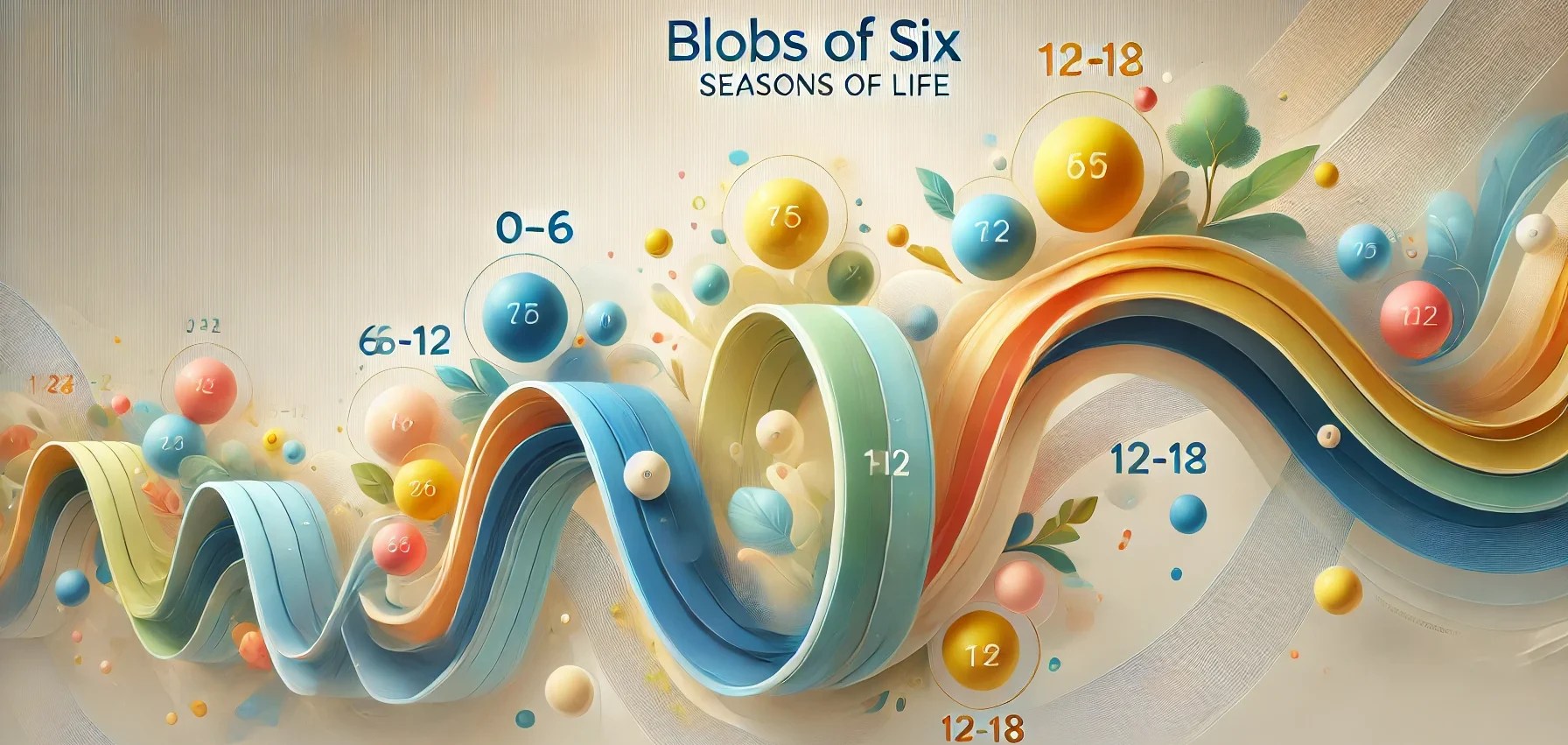
Read more about the 6 year Blobs:

Spring: 1-6, 7-12, 13-18, 19-24
Summer: 25-30, 31-36, 37-42, 43-48
Autumn: 49-54, 55-60, 61-66, 67-72
Winter: 73-78, 79-84, 85-91, 91-…