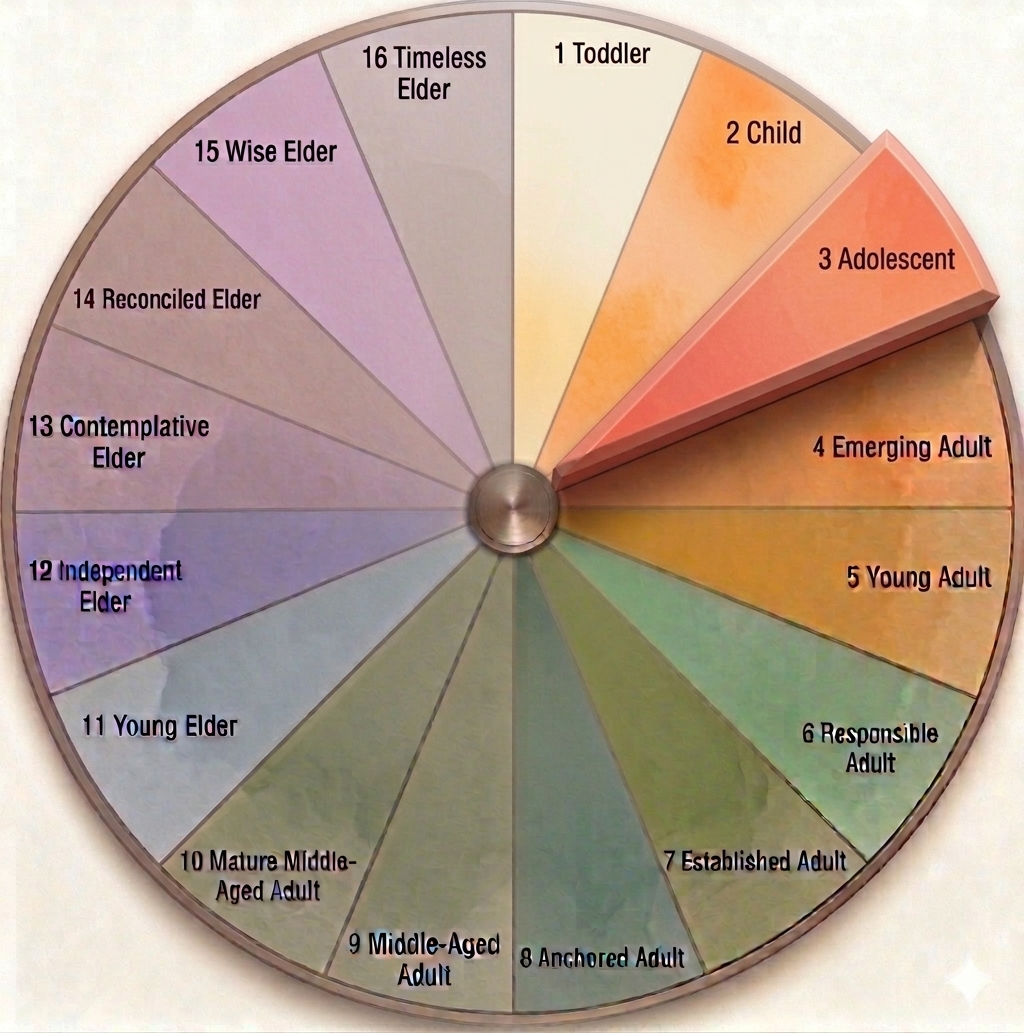
The In-Between Years
Adolescence is, by any reckoning, one of the most complex and tumultuous periods of human life. The adolescent is no longer a child. They have adult-level cognitive capacity in many domains, strong moral convictions, intense emotional life, and a growing need for autonomy and self-determination. And yet they are not quite an adult either. The brain's regulatory systems are still maturing, impulsivity is high, the future feels both urgent and abstract, and the peer group exerts a gravitational pull on decision-making that can override even well-formed values.
This tension, caught between two worlds and belonging fully to neither, is the defining experience of adolescence. It is uncomfortable for adolescents and frequently baffling for the adults who love them. Understanding what is actually happening developmentally can transform how parents, teachers, and communities relate to young people in this stage.
Physical and Sexual Development
Puberty is the biological engine of adolescence, a cascade of hormonal changes that transforms the child's body into a reproductive adult body, typically over a period of 2–5 years. The timing varies significantly between individuals and between sexes:
- Girls: Puberty typically begins between ages 8 and 13, with the first signs being breast development and growth in pubic hair. Menarche, the first menstrual period, typically occurs around ages 12–13, usually 2–3 years after puberty begins. The experience of menstruation is highly individual. Some girls find it unremarkable. Others find it significantly disruptive, particularly if dysmenorrhoea (painful periods) is present.
- Boys: Puberty typically begins somewhat later, between ages 9 and 14, with testicular growth being the first sign, followed by pubic hair, genital development, and eventually the voice change and growth spurt. Boys typically reach puberty between ages 13–14 on average.
- Growth spurt: Both sexes experience a significant acceleration in height during puberty, girls typically earlier (11–13) and boys later (13–15). These spurts can be accompanied by joint pain, clumsiness as the body adjusts to new proportions, and significant appetite increases.
The physical changes of puberty are experienced against the background of intense self-consciousness. The adolescent body is changing rapidly and often unpredictably, and the adolescent is highly aware of how their changing body compares to both peers and cultural ideals. Body image concerns peak during this period, and the groundwork for both body confidence and body shame is often laid here.
Identity Formation: The Central Task
Erik Erikson identified the developmental challenge of adolescence as Identity vs. Role Confusion. The adolescent is engaged in an active, often anxious process of answering a set of profound questions: Who am I? What do I believe? Where do I belong? What am I capable of? What kind of person do I want to become?
This identity work unfolds across multiple domains simultaneously: values and beliefs, vocational direction, relational style, political and philosophical outlook, gender and sexual identity, cultural and ethnic belonging. The adolescent tries on different identities, affiliations, and ways of being, sometimes committing passionately to a position for months before abandoning it for its opposite. This is not inconsistency or immaturity. It is the method by which identity is forged.
The Central Tension of Adolescence
"I am not a child, but I am not yet an adult." This is not merely a social observation. It is a neurological reality. The adolescent brain is, in many respects, extraordinary: emotional intensity, creativity, risk-taking capacity, and social sensitivity all peak in adolescence. But the prefrontal cortex, the brain's executive control system responsible for impulse regulation, long-term thinking, and risk assessment, does not reach full maturity until the mid-to-late 20s. The result is a person of adult emotional depth and child-level regulatory capacity, living in an adult-shaped world that often misunderstands both. Compassion and clear boundaries, held simultaneously, is the appropriate adult response.
Emotional Life: Intensity and Mood
Adolescent emotional life is characterised by intensity. The hormonal surges of puberty, combined with the heightened emotional sensitivity of the developing brain, produce emotional responses that can feel disproportionate to observers but are genuinely experienced as overwhelming from the inside. Mood swings, from elation to despair within hours, are common and neurologically explicable.
Self-consciousness peaks during early adolescence. The adolescent's perception that everyone is watching them and judging them, what developmental psychologist David Elkind called the "imaginary audience," is not vanity. It is a cognitive characteristic of this developmental period. Understanding it helps adults respond with empathy rather than dismissal.
Peer Influence: Fitting In and Standing Out
The peer group assumes enormous significance during adolescence. Belonging to a friend group, a subculture, a team, or a movement fulfils deep developmental and neurological needs at this stage. The adolescent brain is particularly sensitive to social reward and social pain, making peer acceptance a matter of genuine psychological urgency.
Peer pressure is most intense in early adolescence (13–15) and typically decreases through later adolescence as identity becomes more consolidated and the individual becomes better able to maintain their own perspective under social pressure. The risks associated with peer influence, including risk-taking, substance use, and academic disengagement, are real and well-documented, but the solution is not social isolation. Strong family attachment, peer groups with prosocial values, and trusted non-parental adults such as coaches, teachers, and mentors are among the most reliable protective factors.
Academic Pressure and Future Planning
The secondary school years introduce escalating academic pressure, often culminating in high-stakes examinations that feel, to the adolescent, as if they will determine the entire trajectory of life. Abstract thinking develops significantly during this period (Piaget's formal operational stage), allowing for hypothetical reasoning, systematic problem-solving, and the consideration of possibilities that don't yet exist.
This emerging capacity for abstract thought enables adolescents to engage seriously with complex intellectual ideas, philosophical questions, and long-term future planning. But it also opens the door to catastrophic thinking. If abstract reasoning can construct hopeful futures, it can equally construct disasters. Anxiety disorders peak in adolescence, and the academic pressure environment can significantly amplify underlying vulnerability.
Technology: Living Online
Contemporary adolescents are the first generation to have grown up with smartphones and social media as the normal substrate of social life. Research consistently shows that the average adolescent now spends approximately 8.5 hours per day engaged with screens, a figure that includes educational use but is dominated by social media, gaming, and entertainment consumption. Social media use is associated with increased social comparison, heightened anxiety, disrupted sleep, and elevated rates of depression and body image concern, particularly for girls.
And yet technology is also where adolescents' social lives now largely occur. The question is less about total screen time and more about the quality of engagement: whether technology serves connection or replaces it, whether it amplifies creativity or passivity, whether the online environment encountered supports or undermines the adolescent's developing sense of self.
Creating Conditions for Flourishing
Adolescents who have stable, loving family relationships, meaningful peer connections, at least one trusted adult outside the family, and some domain of genuine competence and contribution tend to navigate this stage well. When the environments around them take their developing sense of self seriously, they emerge with a strong and coherent identity. The conditions for this are not exceptional. They are achievable. And they are worth every effort.