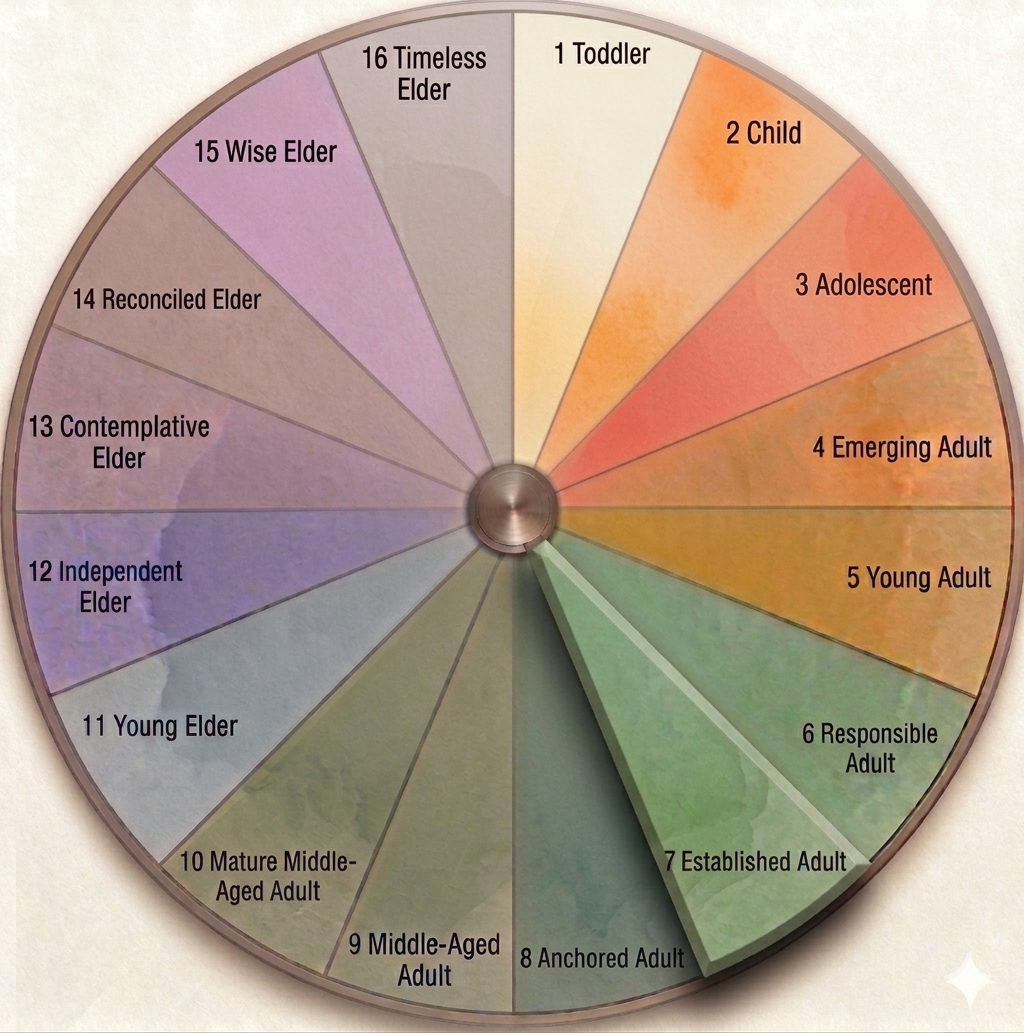
The Midlife Transition Arrives
Daniel Levinson called the period between roughly 40 and 45 the Midlife Transition, one of the most significant developmental passages in adult life. It is not, as popular culture insists, an episode of embarrassing behaviour or impulsive decision-making. It is a critical reassessment: a moment when the scaffolding of early adulthood is examined in the light of actual lived experience, and when the gap between the life you imagined and the life you have built becomes impossible to ignore.
The Established Adult blob sits right at the threshold of that transition. By the late thirties, many people have achieved the goals they set in their twenties: the career, the family, the recognisable shape of a successful adult life. And then, with bewildering frequency, the question arrives: "Is this all there is?"
When Achievement Feels Empty
The dissonance of the Established Adult blob is peculiar precisely because it arrives alongside genuine success. This is not the frustration of someone who has failed to build what they wanted. It is the more subtle and harder-to-articulate discomfort of someone who has built exactly what they wanted, and found that it does not feel the way they thought it would. Career achievements that seemed unambiguously meaningful from a distance feel complicated up close. Relationships that were the answer to earlier questions have generated new ones. The identity that was assembled across the twenties and thirties starts to feel, if not wrong, then incomplete.
For people who delayed having children, or who remain childless and are genuinely uncertain about it, this blob can carry a particular kind of urgency. The late thirties and early forties are when the biological window for parenthood begins to close, and this creates what is sometimes described as an "eleventh hour" quality to the decision: the sense that this is the last moment at which the question can still be answered in a particular way.
The Midlife Transition vs. The Midlife Crisis
These are not the same thing. A midlife crisis (the dramatic, cliché-ridden version) is one possible response to the midlife transition. It involves fleeing from the discomfort into impulsive action: the affair, the sudden career abandonment. A midlife transition is the deeper developmental process that prompts those impulses: the genuine reassessment of meaning and direction that this life stage invites. The transition is not optional. What you do with it is.
Relationships Under Pressure
Divorce rates show a notable concentration in this life phase. The combination of accumulated relationship fatigue, the reassessment of personal values, the pressures of intensive parenting, and the emergence of long-suppressed individual needs creates conditions in which partnerships that survived the thirties may struggle in the early forties. This is not inevitable, but it is worth naming. The couples who navigate this blob most successfully tend to be those who treat the reassessment as something to do together, rather than something one partner does alone.
The Double Shift of Parenthood
For those with children, the late thirties and early forties often bring the most intensive period of active parenting. Children in primary and secondary school require enormous amounts of time, attention, and emotional presence. Simultaneously, many people in this blob are watching their own parents enter retirement, begin to slow down, or face the first serious health challenges of old age. The responsibility flows in both directions, and the middle position, caring for the generation above while raising the generation below, is physically and emotionally demanding in ways that are rarely adequately acknowledged.
The Body in Transition
For women, the late thirties and early forties frequently bring the first signs of perimenopause. Disrupted sleep, mood variability, and weight redistribution toward the abdomen are among the most common experiences. These changes are medically well-understood but culturally under-discussed, often leaving women to interpret significant physiological shifts in isolation. Understanding that these changes are normal and manageable makes a real difference to how they are experienced.
Reassessment Is Not Failure
The defining insight of this blob is that the reassessment it triggers is not a symptom of something having gone wrong. It is a mark of maturity. Only someone who has genuinely built something is in a position to ask whether it was worth building. Only someone with enough accumulated experience can recognise the gap between what they were told to want and what they actually need. The question is not "have I failed?" The real question is: "what do I want the second half of my life to be?" That question, asked honestly and answered with courage, is the gateway to the second half of Summer.