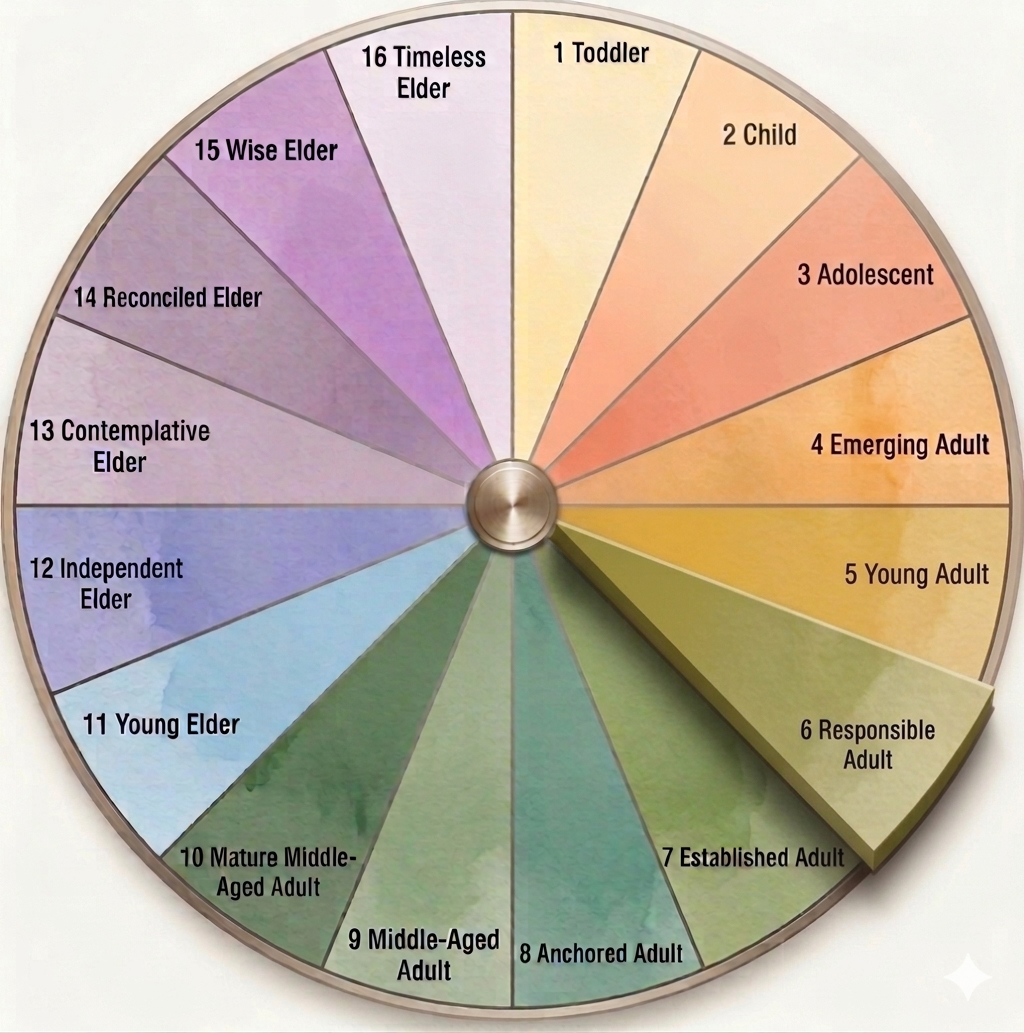
Levinson's Settling Down
The developmental psychologist Daniel Levinson described the early thirties as a "Settling Down" phase, the period when people work to establish what he called a "niche" in the world: a stable base of career, relationships, and place from which the rest of adult life can be constructed. The word "settling" is unfortunate, because it carries connotations of resignation. What Levinson actually described was the opposite: a focused, deliberate effort to build something real and lasting out of the raw possibilities of the twenties.
The Responsible Adult blob is the moment when life stops feeling like a draft. You are no longer preparing to begin. You have begun. The structures you are building now (career trajectories, partnerships, mortgages, families) carry genuine weight and genuine consequence, and most people in this blob feel both the satisfaction of that and the pressure of it simultaneously.
The Changing Shape of Commitment
Marriage rates in the EU-28 have declined by approximately 50 percent since 1965, and around 40 percent of births now occur outside of formal marriage. This does not mean commitment is disappearing. Its forms are diversifying. Co-parenting without romantic partnership, living-apart-together arrangements, and long-term cohabitation without legal formalisation are all established ways that people in this blob organise their intimate lives.
What remains constant across these varied forms is the underlying developmental task: the move from the open-ended possibilities of early adulthood toward structures that involve genuine mutual obligation. Whether that structure is a mortgage in two names or a shared custody arrangement, the psychological shift is the same. You are no longer building a life for a hypothetical future self. You are building it for the person you actually are.
The Settling Down Myth
"Settling down" does not mean settling. It does not mean abandoning ambition, adventure, or growth. It means finding a stable enough base that real development can happen, the way a tree does not become less alive because it has roots. The people who resist all structure in the name of freedom often find themselves, at 40, still drafting a life they never quite started. Stability and adventure are not opposites. One makes the other possible.
Career, Property, and the Geography of Adulthood
The early-to-mid thirties are typically the years of first serious career advancement: the move from being good at a job to becoming someone who is known for being good at it. Professional recognition, mentorship relationships, and the first real leadership responsibilities often arrive in this blob. For many, home ownership functions as a marker of stability, even when the economics of it are genuinely complicated. In high-cost cities, the decision to remain or migrate elsewhere is often made here, and it shapes everything else.
The Uneven Division of Labour
One of the most significant gender dynamics of this blob plays out in parenting. When children arrive, one partner (statistically, overwhelmingly still the mother) frequently reduces paid working hours, steps back from career development, or exits the workforce entirely. The long-term economic and psychological consequences of this pattern are well-documented and rarely fully anticipated at the time. Couples who navigate this blob most equitably tend to be those who discuss it explicitly before it becomes an emergency.
The Body Begins Its Quiet Renegotiation
The physical changes of this blob are subtle enough to be easy to ignore, and significant enough to be worth acknowledging. Muscular strength begins a slow decline, though this is almost entirely reversible with consistent exercise. Hair may begin thinning or greying. Near vision may shift. Recovery from illness or exertion takes fractionally longer than it once did. Cognitively, the picture is mixed: processing speed shows early signs of slowing, while verbal ability, accumulated knowledge, and professional judgement continue to strengthen. This is a body transitioning from raw capability to refined capability, and the distinction matters.
The Responsible Adult blob asks a question that sounds simple and isn't: "What kind of life am I actually building?" Not what kind of life am I intending to build, or hoping to build. What are the actual choices I am making, day by day, and what do they add up to? The people who ask this question clearly, and answer it honestly, have a considerable advantage over those who simply allow the blob to happen to them.