The Age of Reason
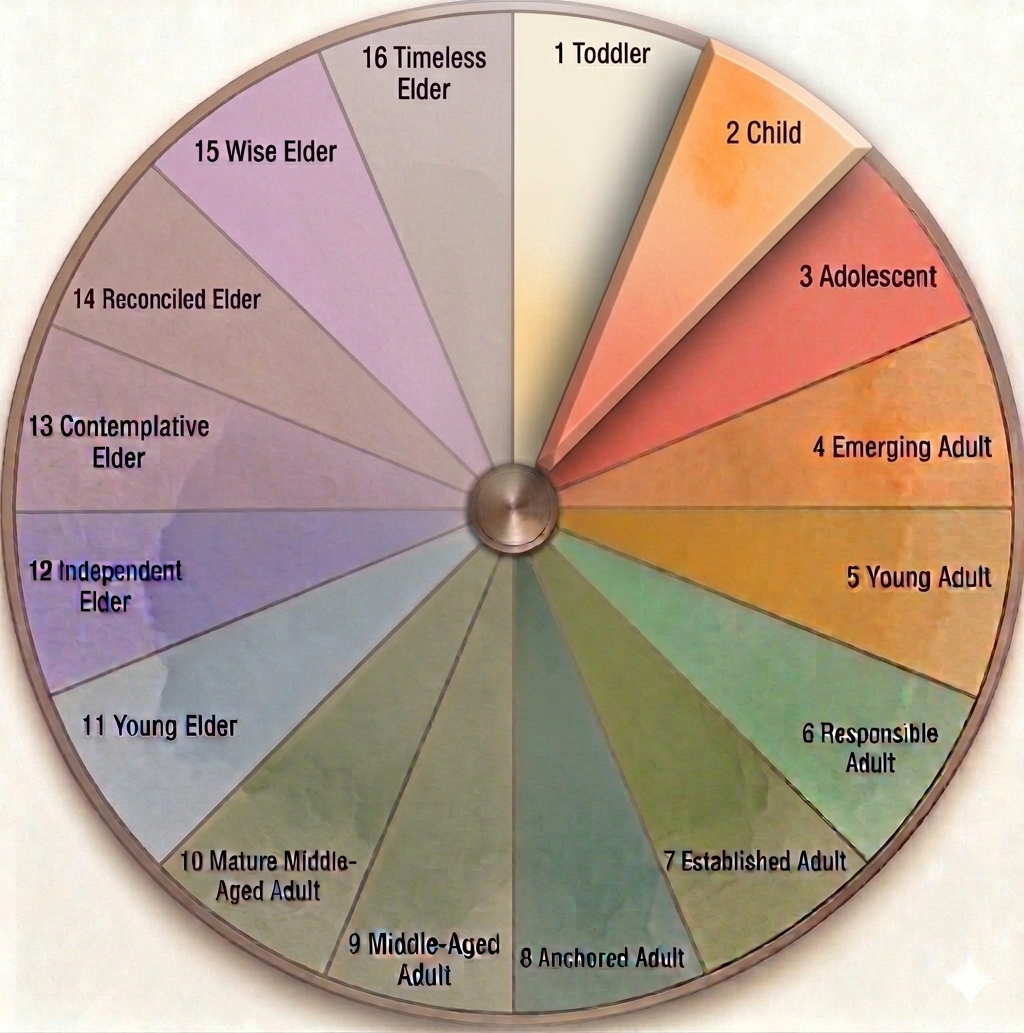
Something shifts around age 7. It is not sudden, developmental changes rarely are, but it is unmistakable. The fantastical, magical thinking of the toddler and early childhood years begins to give way to something more grounded, more logical, more reasoning. Children in the 7–12 age range begin to categorise, to serialise, to understand reversibility (if you can add, you can subtract), and to apply consistent rules to problems.
The developmental psychologist Jean Piaget called this the stage of concrete operational thinking, the ability to perform mental operations on real, tangible objects and events. Abstract reasoning is still developing, but logical thought applied to concrete situations is now well within reach. This is also the developmental window in which the left hemisphere of the brain, responsible for language, sequential thinking, and analysis, begins to take a more prominent role alongside the right hemisphere's emotional and creative processing.
Academic Foundations: Reading, Writing, Mathematics
The 7–12 stage is characterised by the consolidation of the skills that form the foundation of formal education. Reading, which most children are learning from around age 5–6, becomes fluent and functional during this period. The shift from "learning to read" to "reading to learn" typically occurs around age 8–9, a transition that opens the entire world of human knowledge to the child who has made it.
Writing develops alongside reading, moving from laborious letter formation to the expression of ideas and arguments. Mathematical reasoning deepens as children move from simple arithmetic to fractions and the beginnings of algebraic thinking. Each of these competencies is partly built on neurological maturation and partly on instruction and practice. This is why the quality of teaching and the classroom environment during these years has measurable long-term effects.
Children who struggle with reading or maths during this window, whether due to dyslexia, dyscalculia, attention difficulties, or gaps in early instruction, can experience cascading effects on confidence and academic trajectory if the difficulty is not identified and supported. Early intervention during this stage yields disproportionately large returns.
Peer Friendships: The Social Curriculum
If the toddler years are about family relationships and the infant years about caregiver attachment, the child years see the beginning of a gradual reorientation toward peers. From around age 7, same-sex friendships become particularly intense and important. Children form close alliances, and social status within peer groups becomes a significant source of either security or anxiety.
This social world is rich and valuable. Navigating it develops empathy, negotiation, and self-awareness. It is also the stage at which bullying, exclusion, and peer pressure make their first significant appearance. Children in this age range are beginning to care deeply about social belonging, and exclusion from a peer group can be genuinely distressing. Adults who minimise the social pain of a 9-year-old are misreading the developmental moment.
Erikson's Industry vs. Inferiority
Erik Erikson identified the central developmental challenge of this stage as Industry vs. Inferiority. The child is beginning to measure themselves against external standards, academic performance, athletic ability, social success. When they experience competence and mastery, they develop a sense of industry: I am capable, I can do things, I am good at something. When they experience persistent failure or criticism without support, they develop a sense of inferiority: I am not as good as others, I am not capable. The role of caregivers and teachers is not to protect children from all failure. Failure is essential to learning. The goal is that the overall emotional ledger tilts toward competence. Freedom to try, freedom to fail, and freedom to try again within a framework of loving support is the optimal environment for this stage.
Family Life: Dependence and the First Questions
Despite the growing importance of peers, family remains the primary attachment base throughout this stage. Children aged 7–12 still depend fundamentally on their family for emotional security and a sense of identity. Across OECD nations, approximately 83% of children in this age range live with both biological parents, though a wide diversity of family structures are all capable of providing the security children need.
The beginning of questioning, of family rules, parental authority, cultural or religious practices, typically begins in the later years of this stage. This is healthy and expected. The child is beginning the slow process of developing their own moral and intellectual framework. The appropriate response is not to shut down questions, but to engage with them, to model intellectual humility and to demonstrate that adults can be wrong, can change their minds, and can reason rather than simply assert.
Moral Development: Right, Wrong, and Why
Moral reasoning becomes significantly more sophisticated during this period. The younger child's morality is largely rule-based. Actions are right or wrong because adults say so. By age 9–10, children begin reasoning about intentions, context, and consequences. They develop a genuine sense of fairness that extends beyond self-interest and begin to grasp principled moral reasoning.
This is also the stage at which moral imagination can be cultivated through stories and discussions of ethical dilemmas. Literature, in particular, is a powerful vehicle for moral development at this age, offering children access to the inner lives of characters facing genuine moral choices in contexts far beyond their immediate experience.
Technology's Growing Presence
Children in the 7–12 age range are increasingly navigating digital environments, games, social media (despite age restrictions), and messaging apps. The research on technology use in this age group is nuanced. Moderate, purposeful use appears to have neutral or even positive effects. Heavy passive consumption, particularly of social media, is associated with increased anxiety and reduced attention spans. Parents and educators face the challenge of establishing healthy digital habits before adolescence, when peer influence makes parental guidance harder to exercise.
The most protective factor is not the amount of screen time but the relational context around it. Families who talk about what their children are watching and playing, who share digital experiences together, and who maintain non-screen family rituals appear to navigate this period most successfully.