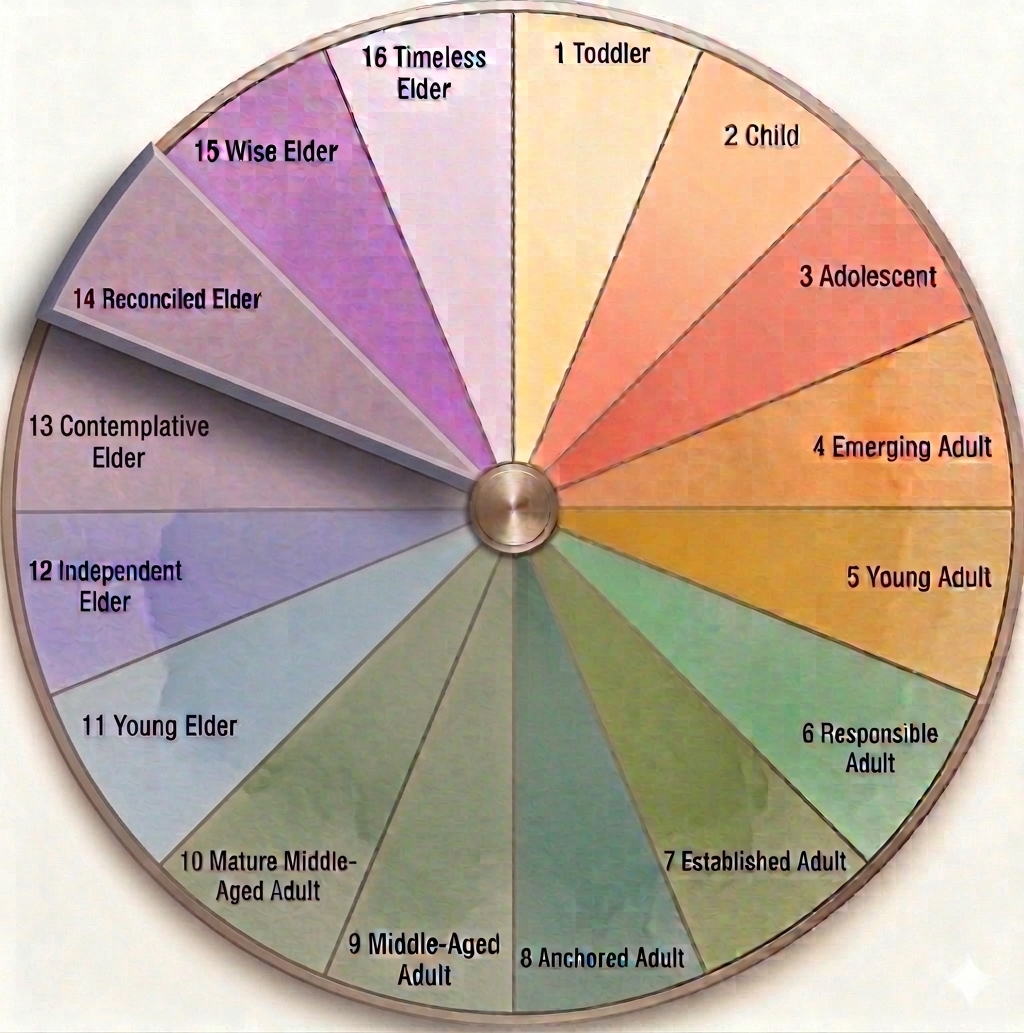
Independence Within Constraint
Perhaps no tension defines the Reconciled Elder Blob more precisely than the push and pull between increasing dependence and a fierce, abiding desire to remain independent. People in their early eighties frequently describe a dual reality. They know they need more help than before, and they resist asking for it with every fibre of their identity. Home is not merely a preference. It is a statement of selfhood. To remain in one's own space, on one's own terms, is to remain oneself.
This is not stubbornness for its own sake. It reflects something psychologically essential. The home, with its familiar arrangements and routines, is a container for memory and identity. Leaving it, or having it transformed into a care environment, can feel like a dissolution of the self.
The Demographics of This Stage
The numbers help frame what is actually happening in society at this life stage. Across the European Union, average life expectancy currently sits at 80.6 years, 77.9 for men and 83.3 for women. This means that for many people, the Reconciled Elder Blob spans the statistical centre of the human lifespan in wealthy nations. It is a stage already under enormous demographic pressure.
Today, those aged 80 and over account for approximately 6% of the EU population. By 2100, that proportion is projected to reach 15.3%. The oldest-old are not a marginal group heading toward the edges of the data. They are becoming a defining feature of European society. Despite what many assume, only 1.7% of very old adults in Europe currently live in institutional care. The vast majority are at home, supported or managing independently.
Physical and Cognitive Changes
The body at 79–84 undergoes real and measurable changes that require honest acknowledgement. Cerebral blood flow declines by around 20%, which affects processing speed and sometimes memory retrieval, though not necessarily depth of understanding or wisdom. Muscle mass may be reduced by up to 30% from peak levels, making falls a genuine concern. Around 25% of people in this Blob experience significant vision loss, and hearing problems affect approximately 75%.
Cognitive health becomes a pressing concern. Alzheimer's disease prevalence rises steeply with age, and by the mid-eighties it affects around half of those in their age group. Where dementia begins in the sixties or seventies, research suggests it tends to follow a faster trajectory than later-onset forms. These are not comfortable statistics, but honest preparation, both personal and social, is a mark of genuine respect for this stage of life.
What Keeps People Thriving
Activity Theory offers a compelling framework here: remaining engaged in meaningful activity is not merely pleasant. It is life-extending. Studies have found that 30 minutes of daily walking reduces mortality risk by up to 50% in this age group. This is perhaps the single most accessible and effective health intervention available to people in this Blob.
Continuity Theory adds a complementary insight. People who maintain activities and roles that feel familiar tend to preserve a stronger sense of identity and wellbeing. Gardening, reading, community involvement, the specific activity matters less than the thread of continuity it represents. For those who hold a positive orientation toward life, research suggests that future-directed thinking, plans and anticipation, has a measurable impact on longevity. The mind's relationship to the future shapes the body's relationship to time.
Only 1.7% in Care
Despite widespread assumptions, the overwhelming majority of people in their eighties are not in care homes. Across the European Union, only 1.7% of very old adults live in institutional care. This reality has profound implications for policy, family planning, and how we design communities. The typical 80-year-old is at home, navigating independence, accepting some support, and resisting more. Understanding this changes how we think about ageing. It challenges narratives that treat institutional care as the default destination of old age.