The First Blob of Summer
I have watched people enter this Blob in seven different countries. The details change. The feelings do not. Whether you are 26 in Mumbai or 28 in Munich or 25 in Beijing, the same question sits in your chest: am I where I should be?
You are supposed to have answers by now. That is what the society tells you. Finish your education, find your career, choose your partner, stand on your own feet. And yet here you are, possibly earning money for the first time, possibly still unsure what you actually want to do with your life, possibly watching friends announce engagements while you cannot decide what to have for dinner.
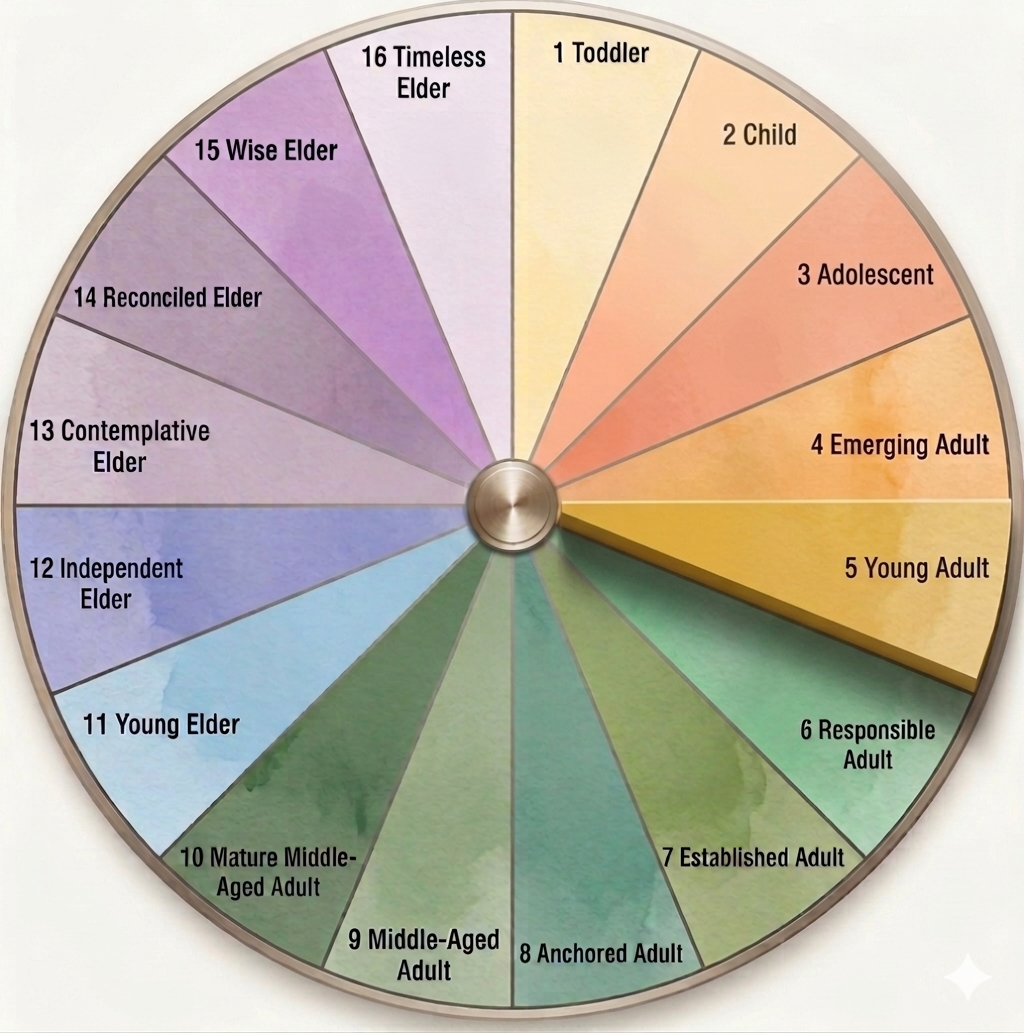
This is the first Blob of Summer in the Blobs framework. Spring was for growing up. Summer is for building. But the blueprints are not as clear as you were promised.
You are not behind. You are on schedule.
The psychologist Jeffrey Arnett spent five years interviewing 300 young Americans about what they wanted from life. He expected identity questions to be settled by the mid-twenties. They were not. What he found instead was a distinct life stage he called "emerging adulthood," defined by five characteristics: identity exploration, instability, self-focus, a sense of possibility, and a persistent feeling of being in-between. Not adolescent any more, but not quite adult either.
Brain science backs this up. Cambridge neuroscientist Peter Jones has stated plainly that people do not become fully adult until their 30s. The brain is still developing, still wiring itself for complex decision-making and emotional regulation, well past the point when society expects you to have it all figured out.
A LinkedIn survey of more than 6,000 people across four countries found that 75 percent of adults aged 25 to 33 reported experiencing a quarter-life crisis. A 2025 study across eight countries, from the UK to Indonesia to India, confirmed the pattern: between 40 and 77 percent of young adults in every country studied had lived through a developmental crisis episode in their twenties. These episodes typically lasted one to two years.
"This is not a personal failure. It is a stage."
The weight of too many options
One of the most counterintuitive findings from recent research is that having more choices can make you feel worse, not better. German researchers use the term Multioptionsgesellschaft to describe the multi-option society, where young adults are paralysed not by a lack of possibilities but by the sheer number of them.
A German study of 1,000 young adults found that 47 percent of people aged 20 to 30 were in the middle of a quarter-life crisis. The main triggers were not dramatic life events. They were quieter: the fear of not finding the right career, unclear life goals, and confusion caused by having too many doors open at once.
Always visible, rarely seen
University of Vienna researchers found that social media's demand for constant visibility destroys what they called "unsupervised life spaces," the unmonitored hours young people need to process their lives without performing them. The result is a generation that is always visible but rarely seen.
German academics have started calling the years between 18 and 30 the Odysseusjahre, the Odyssey years. A wandering journey with no fixed destination. That image is more honest than the straight-line career path most of us were taught to expect.
What "standing firm" means (and where that idea comes from)
In Chinese culture, 30 carries a specific weight. Confucius said: "At thirty, I stood firm" (三十而立, sān shí ér lì). The phrase was originally about moral clarity, about knowing where you stand and what you believe.
In modern China, the meaning has shifted. 三十而立 has become a social deadline. If you are over 30 and neither financially established nor married, the implication is that something has gone wrong. The philosophical ideal has turned into a performance metric.
Chinese young adults have coined their own word for the feeling this creates: 内卷 (neijuan, involution). It means busy-ness without progress, the sensation of running as hard as you can and ending up in the same place. The term was ranked among China's top internet slang in 2020 and surged again in 2024. It captures something that young adults in Berlin, Delhi, and London would also recognise: the exhausting loop of effort without visible reward.
"内卷 (neijuan, involution). Busy-ness without progress. The sensation of running as hard as you can and ending up in the same place."
Chinese internet slang, ranked top in 2020, surged again in 2024In India, the deadline at 30 takes a different shape but carries similar force. Marriage remains the most visible marker of adulthood, especially for women. A recent study found that 62 percent of Indian women now prioritize their careers over marriage. In Tier 1 cities in Maharashtra, 39 percent of women aged 25 to 29 are unmarried. But the pressure is still there: women are given less time than men to "settle down," and in smaller towns, being unmarried past 30 still invites pointed questions from relatives and neighbours.
Among urban Indians aged 26 to 40, 42 percent now say they do not want to marry at all. The institution is not dying, but it is being redefined, moving from what one Indian researcher called a "security net" toward a "shared journey."
Across all these cultures, the same tension is visible. The inherited timeline says: by 30, be settled. The actual experience of living says: at 30, I am just beginning to understand what settled might mean for me.
Your body and brain in this Blob
Physically, you are close to your peak. Muscle strength, reaction time, and cardiovascular fitness are near their highest point. Athletic performance in most disciplines peaks around 28 to 30.
Cognitively, your brain is doing something more interesting than peaking. Long-term memory, complex reasoning, and creative problem-solving are strong and getting stronger. But the brain is also still maturing: the prefrontal cortex, responsible for judgment, impulse control, and long-term planning, is not fully developed until the late twenties or even early thirties.
"You are smart enough to do serious work. You are often not yet steady enough to know which serious work is right for you. Both things are true at the same time."
Relationships and the slow end of the script
The old life script went like this: graduate, get a job, find a partner, marry by 25, children by 28. That script is gone in most industrialised countries, and it is eroding rapidly in the rest.
The new marriage timeline
In the European Union, the average age for a first marriage is now 30 for women and 33 for men. In the United States, similar trends hold. The shift has been driven by longer education, women's entry into the workforce, reliable contraception, and the simple economic reality that independent living now costs more and takes longer to afford.
But the old script still lives in people's expectations, especially family expectations. If you are 28 and single in a culture that assumes you should be married, the pressure is not abstract. It sits at family dinners, in WhatsApp groups, and in your mother's voice when she asks, "So, is there anyone?"
What Erikson identified decades ago still holds: the capacity for real intimacy depends on having a stable sense of who you are. If you do not yet know what you want from your own life, choosing a partner is a gamble at best. The Rochester Adult Longitudinal Study tracked people from their twenties into their sixties and found that those who resolved their identity questions early had better intimate relationships, greater generativity, and more integrity later in life. The work you do on yourself at 27 pays dividends at 57.
What this Blob asks of you
The 19–24 Blob asks: what is possible? This Blob asks something harder: what will you actually commit to?
Not everything. Not yet. But something. A direction, a relationship, a skill, a place. The German therapist Annika Lang offered a provocative thought: the quarter-life crisis is, in a sense, an early attempt to prevent a midlife crisis. If you do the hard work of self-examination now, the reckoning at 50 may be gentler.
"The quarter-life crisis is, in a sense, an early attempt to prevent a midlife crisis. If you do the hard work of self-examination now, the reckoning at 50 may be gentler."
Annika Lang, German therapistNot everyone navigates this Blob smoothly. Some people lock themselves into choices too early and spend the next decade feeling trapped. Others refuse to choose at all, cycling through jobs, cities, and relationships without landing anywhere. The Blobs model does not judge either path. But it does say that this stage is finite. By 31, you will be in a different Blob, facing different questions. The ones you answer now, and the ones you avoid, will follow you there.
Keep reading
If you are in this Blob right now, these posts go deeper into the questions it raises.
Navigating Your Quarter-Life Crisis
A grounded look at what the quarter-life crisis actually is and what you can do with it.
Read more → FrameworkTime to Leave Behind the 7-Year Life Cycles?
Why the old models for understanding your life no longer fit, and what the Blobs framework offers instead.
Read more → Self-ReflectionHow Old Do You Feel?
The question nobody else is asking: whether the number on your passport matches the age inside your head.
Read more →One question to sit with
If you could not compare yourself to anyone else your age, what would you actually want your life to look like right now? Share your answer in the comments below.